
Commentary
Children's lungs grew faster after ULEZ. What that tells us about behaviour change, and what comes next
The CHILL study closed a loop that policy debates usually leave open. The interesting question is what actually changed.
24 August 2026 · 6 min read · By Will Line, CEO
Every so often, a piece of research closes a loop that policy debates usually leave open. The CHILL study, published this week in The Lancet Public Health, is one of them.
The study, led by Queen Mary University of London with Imperial College and others, followed more than 3,400 children aged six to nine across 84 primary schools over five years. London was the intervention city; Luton, with similar traffic and pollution but no clean air zone, was the control.
Before ULEZ, children in London had measurably lower lung function than their peers in Luton. After its introduction, their lung growth accelerated until it caught up, with FEV₁ growth around 10ml per year greater than in Luton. The proportion of London children with impaired lung function fell from 14% to 9%. Over the same period, NO₂ exposure fell more than twice as much in London as in Luton.
Read that chain back. ULEZ changed the incentives around road travel. Traffic-related pollution fell faster in London than in the comparison city. And children's lung growth improved alongside it.
Policy rarely gives us evidence this useful. Whatever position you took on ULEZ when it was being fought over, and it was fought over fiercely, the findings give us an unusually strong opportunity to look beyond the politics and ask what actually changed.
What actually changed: behaviour
It's worth being precise about the mechanism, because "ULEZ cleaned the air" skips the most interesting step.
ULEZ didn't clean anything directly. It changed the incentives around a daily journey, and millions of individual decisions followed: upgrading vehicles, changing routes, switching modes and rethinking routines. Compliance with the emissions standards now exceeds 97%.
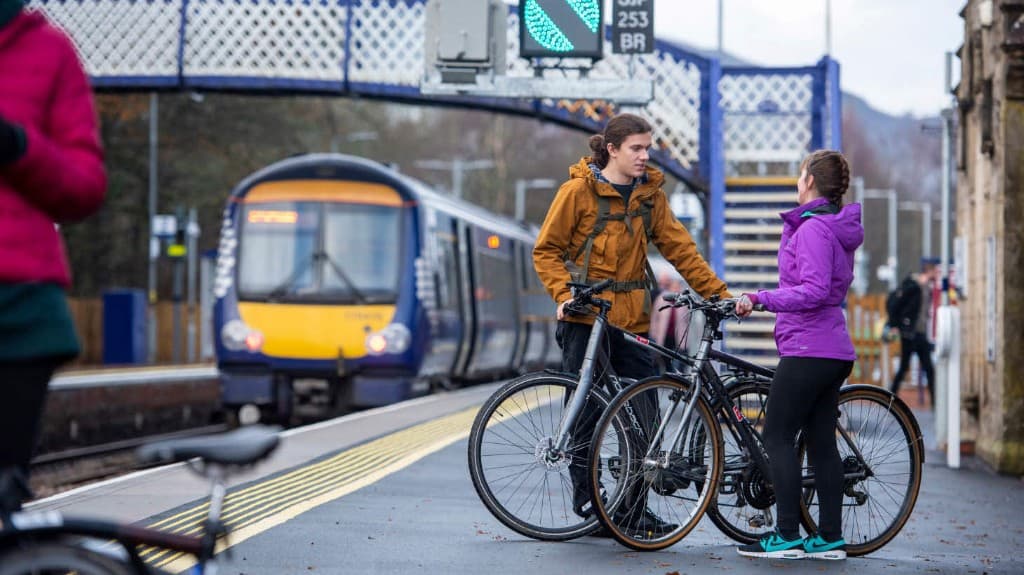
There is evidence that the response went beyond cleaner vehicles too. An earlier CHILL analysis found that, among children who had previously travelled to school by car, 42% of those in the London cohort switched to active travel after ULEZ, compared with 20% in Luton.
That is the finding I keep coming back to.
The most common objection to almost any travel initiative, in any organisation I've worked with, is that people won't change: the commute is too embedded, the car too convenient, the habit too strong.
But travel behaviour is not fixed.
It responds to the system it sits inside: the incentives, infrastructure, information, cost and quality of the alternatives. Change those conditions and behaviour can change with them.
The second thing London got right was measuring from the start. Monitoring networks, independent researchers, published methodologies and, now, a five-year cohort study. Through years of noisy political argument, the policy has been measured extensively.
Measurement wasn't the paperwork that followed the policy. It was what made its impact possible to assess and defend.
Where else does this logic apply?
The obvious answer is other cities.
Clean air zones in Birmingham, Bradford and elsewhere are already producing their own evidence on pollution, and the CHILL results add an important health dimension to that wider discussion.
But the more interesting application is any system that shapes how people travel, because the underlying lesson isn't really about charging zones.
The environment around a journey helps determine the journey.
National policy is starting to absorb this. The Sporting Events Bill currently before the Commons makes transport planning part of the standing framework for designated major sporting events, recognising that journeys can and should be shaped deliberately rather than simply left to happen.
The same logic reaches every place sitting at the end of a repeated journey: schools, hospitals, campuses, workplaces and stadiums. Each one is a small transport system that influences thousands of journeys every week, whether it consciously designs those journeys or not.
The harder question: what drives modal shift after ULEZ?
Here is where the story stops being a victory lap.
With more than 97% of vehicles seen driving in London now meeting ULEZ standards, the marginal gains available simply from replacing non-compliant vehicles are narrowing.
Yet London's air, though dramatically better, remains above World Health Organization guidelines, and the researchers themselves say further progress will require more than ULEZ.
The remaining problem is not dirty engines. It is the number of engines.
That means the next phase has to include modal shift: fewer journeys made by private car and more by public transport, shared and active modes.
And modal shift is a genuinely different problem from fleet turnover.
Upgrading a car is one decision made once. Choosing the train, the bus or the bike is a decision remade every morning.
It is won or lost on the quality of the alternative: whether that alternative is reliable, affordable, convenient and pleasant enough to be chosen freely, thousands of times, by people who have other options.
Charging can nudge that choice, but it cannot carry it alone, practically or politically.
The next phase needs different levers.
Better services and infrastructure, so the sustainable option is genuinely competitive.
Better information, so people can actually see and trust their alternatives at the moment they make their decision.
Positive incentives, because encouraging the journey you want repeated can be more effective for everyday decisions than simply penalising the one you don't.
And the same discipline that made ULEZ possible to evaluate in the first place: measuring what people actually do, journey by journey, so future policy and transport programmes can learn and adapt.
London's children are showing better lung growth alongside a major reduction in traffic-related pollution.
Behind that finding is a broader lesson for anyone trying to change the way people travel:
Change the system. Measure the response.
The task ahead is applying that same approach to the harder half of the problem: not just what we drive, but whether we drive at all.
More articles
The fan experience doesn't start at the turnstile
Supporters will endure an extraordinary amount to be there. What they will not forgive is being left with nothing when it goes wrong.
Read article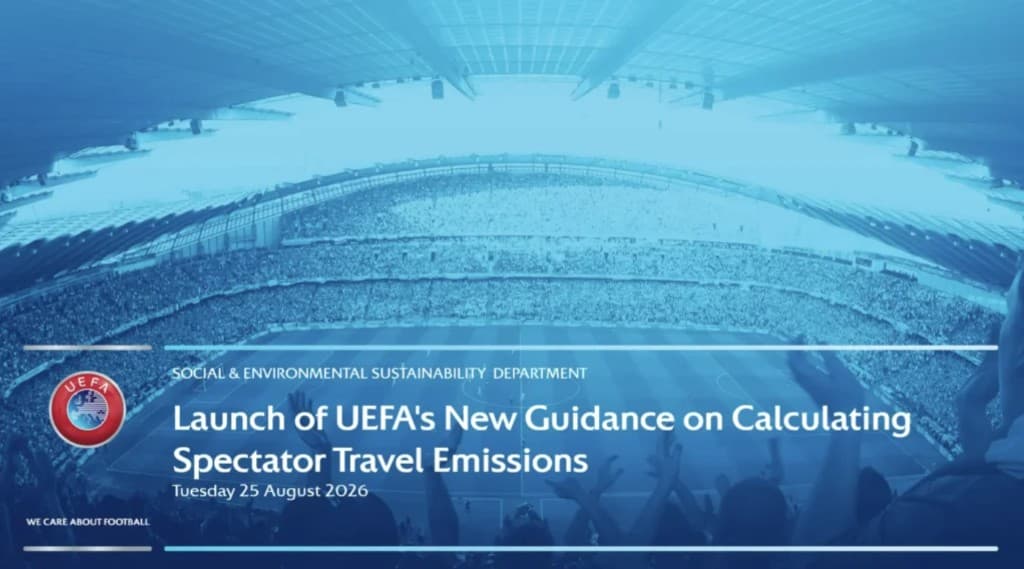
UEFA is helping solve fan travel measurement. What should clubs do next?
A more consistent approach to measuring spectator travel gives football a stronger foundation. The next challenge is turning that data into action, and ultimately changing how supporters travel.
Read article
The Sporting Events Bill: what it actually means for the people who run events
The way major sporting events plan fan transport is about to get a statutory framework.
Read article

Your smarter
way to move
© 2025 Staxy Ltd.